


Version 1.0 — Published July 2026 | Reviewed by X.One® Engineering Team
QUICK ANSWER
mAh measures battery capacity at the cell voltage (typically 3.7V). Wh measures total energy regardless of voltage. A 10000mAh power bank doesn't deliver 10000mAh to your phone — it delivers around 6500–7500mAh of usable charge after voltage conversion losses (60–75% efficiency). Wh is the airline-relevant number; mAh is the marketing number.
The Two Numbers That Matter
mAh (milliamp-hours)
mAh measures the cell-level capacity of the battery at its native voltage. For lithium-ion cells, that's typically 3.6–3.7V. The number tells you how much current the battery can deliver over an hour at that voltage.
The catch: Your phone doesn't charge at 3.7V — it charges at 5V (or higher). The conversion from cell voltage to charging voltage costs energy. Higher conversion = more loss.
Wh (watt-hours)
Wh measures total energy regardless of voltage. It's the universal unit for comparing battery capacities across devices that operate at different voltages. The conversion:
Wh = (mAh × V) / 1000
Wh is what airlines regulate (under 100Wh universally), and what you should compare across power banks of different cell technologies.
Why mAh Marketing Misleads
Here's the trick. Two power banks both advertise 10000mAh:
- Power Bank A: 10000mAh at 3.7V cell = 37Wh actual energy
- Power Bank B: 10000mAh listed at 5V output ("after conversion") = 50Wh actual energy
Both say 10000mAh on the box. Power Bank B has 35% more energy. Marketing claims hide the difference.
The honest measurement is always at cell voltage. Quality manufacturers list both: "10000mAh / 37Wh". Cheap brands list only the larger-sounding number.
Real-World Charge Calculation
Here's the math for an iPhone 17 Pro Max (4685mAh battery at ~3.85V phone voltage):
| Step | Math |
|---|---|
| Power bank rated capacity | 10000mAh @ 3.7V = 37Wh |
| Voltage conversion to 5V (efficiency ~85%) | 37Wh × 0.85 = 31.5Wh delivered |
| Cable / charging losses (~5%) | 31.5Wh × 0.95 = ~30Wh reaching phone |
| Convert to phone-side mAh (3.85V) | 30Wh / 3.85V = ~7790mAh delivered |
| iPhone 17 Pro Max battery | 4685mAh |
| Effective full charges | ~1.66 charges |
So a "10000mAh" power bank gives you about 1.5–1.7 full iPhone 17 Pro Max charges — not the 2+ that math at face value would suggest. This is universal across all power banks; it's physics, not a manufacturer flaw.
Why Wireless Charging Adds Even More Loss
Wireless charging (MagSafe, Qi2, standard Qi) adds another conversion step:
- Wired efficiency: ~95% from power bank to phone battery
- MagSafe efficiency: ~70–80% from power bank to phone battery (extra 15–25% loss as heat)
- Standard Qi efficiency: ~60–70% from power bank to phone battery
A 10000mAh wireless power bank delivers fewer effective charges than a 10000mAh wired one. The convenience of wireless costs efficiency.

Cell Voltage Variations
Most power banks use 3.7V nominal lithium-ion cells. Some use:
- 3.6V cells: Some cheaper power banks. Result: marketed mAh delivers slightly less Wh than 3.7V equivalents.
- 3.85V high-voltage cells: Some premium power banks. Result: marketed mAh delivers slightly more Wh than 3.7V equivalents.
- Lithium polymer (LiPo): Different cell chemistry but similar voltage. Often used in slim form factors.
The voltage difference matters most for airline calculations. A power bank labeled "30000mAh" could be:
- 30000mAh at 3.6V = 108Wh (over 100Wh airline limit)
- 30000mAh at 3.7V = 111Wh (over 100Wh airline limit)
- 30000mAh at 3.85V = 115.5Wh (over 100Wh airline limit)
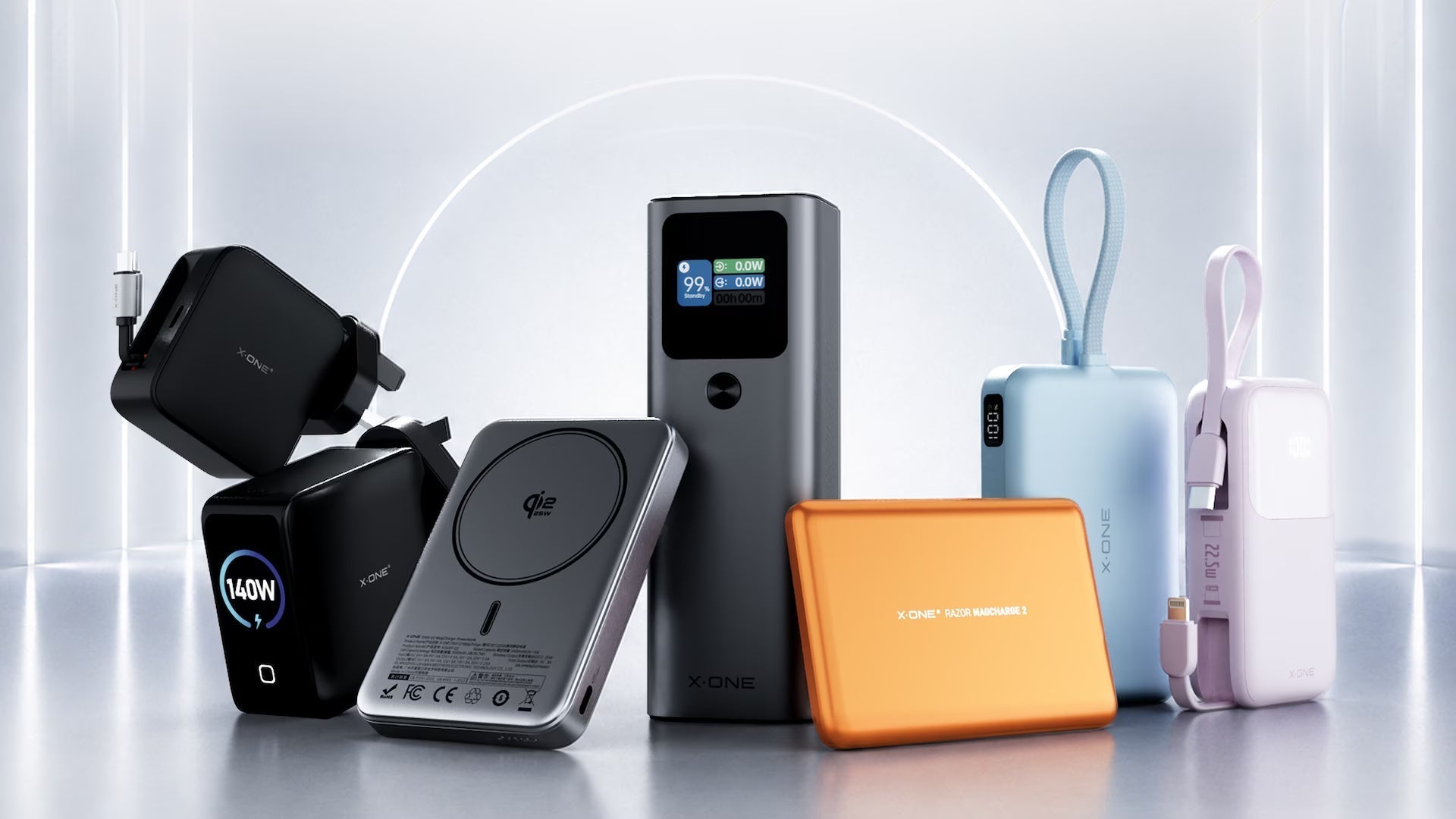
All over 100Wh. This is why power banks above ~27000mAh require airline approval. The X.One® Stellar 140W is sized at exactly 27600mAh / 99.36Wh — maximum capacity under the universal threshold.
How to Compare Power Banks Honestly
1. Compare Wh, not mAh
If both products list Wh, compare directly. Higher Wh = more energy.
2. If only mAh is listed, look for cell voltage
Calculate Wh = mAh × V / 1000. Use 3.7V if voltage isn't specified.
3. Treat "output mAh" claims with suspicion
If a manufacturer lists capacity at output voltage (5V or higher) instead of cell voltage, they're inflating the number. Trustworthy brands list both.
4. Check for efficiency ratings
Some quality power banks publish their conversion efficiency (typically 80–90%). Higher = more delivered charge per Wh stored.
Power Bank Sizing Reference
| Capacity | Wh | iPhone 17 PM charges | Use Case |
|---|---|---|---|
| 5000mAh | ~18Wh | ~0.7 | Emergency top-up |
| 10000mAh | ~37Wh | ~1.5 | Daily commuter |
| 20000mAh | ~74Wh | ~3 | Multi-day travel |
| 27600mAh | ~99.36Wh | ~4 | Laptop-class power, max airline-safe |
Frequently Asked Questions
Why don't I get 2 full charges from a 10000mAh power bank if my phone is 4685mAh?
Voltage conversion losses. The power bank's 10000mAh is at 3.7V; your phone charges at 5V (after PD negotiation, sometimes higher). Converting voltage costs energy. Real-world delivered: ~1.5–1.7 charges.
Are higher-voltage cells more efficient?
Slightly. 3.85V cells lose less energy in voltage conversion to 5V than 3.6V cells do. Difference is ~5–10% in real-world delivery.
Why is wireless charging less efficient than wired?
Wireless requires an extra DC→AC→DC conversion at both the power bank coil and the phone coil. Each conversion costs efficiency. Wired skips both.
Should I be impressed by "50000mAh" claims on cheap power banks?
Almost always inflated. A genuine 50000mAh power bank weighs over 1kg and is over 100Wh (airline-prohibited). Cheap power banks claiming 50000mAh typically test at half their claim or less. Trust Wh ratings from quality brands.
How do I find the actual Wh of my power bank?
Look at the product label. Quality manufacturers print Wh prominently. If only mAh is listed, calculate Wh = mAh × 3.7 / 1000.
Does temperature affect capacity?
Yes. Cold temperatures reduce delivered capacity by 10–20%. Hot temperatures accelerate aging and can throttle output. Optimal range: 15–30°C / 60–85°F.
Why do power banks lose capacity over time?
Lithium-ion battery chemistry. Each charge/discharge cycle slightly degrades the cells. Typical: 20% capacity loss after 500 full cycles (2–3 years of regular use).
Can I trust the manufacturer's stated Wh?
From USB-IF / SGS / UL certified manufacturers: yes. From uncertified brands: variable, often inflated. Look for visible certification logos on the product.
The Bottom Line
mAh is a marketing-friendly number. Wh is the honest one. When comparing power banks, look at Wh (or calculate it from mAh × cell voltage). Expect to lose 25–40% of advertised capacity to voltage conversion in real-world charging.
For most users, a 10000mAh / 37Wh power bank is the daily-use sweet spot. For multi-day travel: 20000mAh / ~74Wh. For laptop power on the road: 27600mAh / 99.36Wh (the maximum airline-safe size).
Browse all X.One® power banks →
About X.One®
X.One® has engineered mobile power accessories since 2009 with honest specifications and Wh ratings.
Sources: Lithium-ion battery chemistry references; voltage conversion efficiency studies; X.One® internal lab measurement.

Share:
Best Clear Phone Case for iPhone 17 in 2026: Tested & Compared
Best Screen Protector for iPhone 17 / Pro / Pro Max in 2026: Tested & Compared